How to Rank in ChatGPT: Get Cited by AI
Learn how to rank in ChatGPT and get your content cited by the AI. This guide shows you the exact strategy to earn citations, build credibility, and appear in A
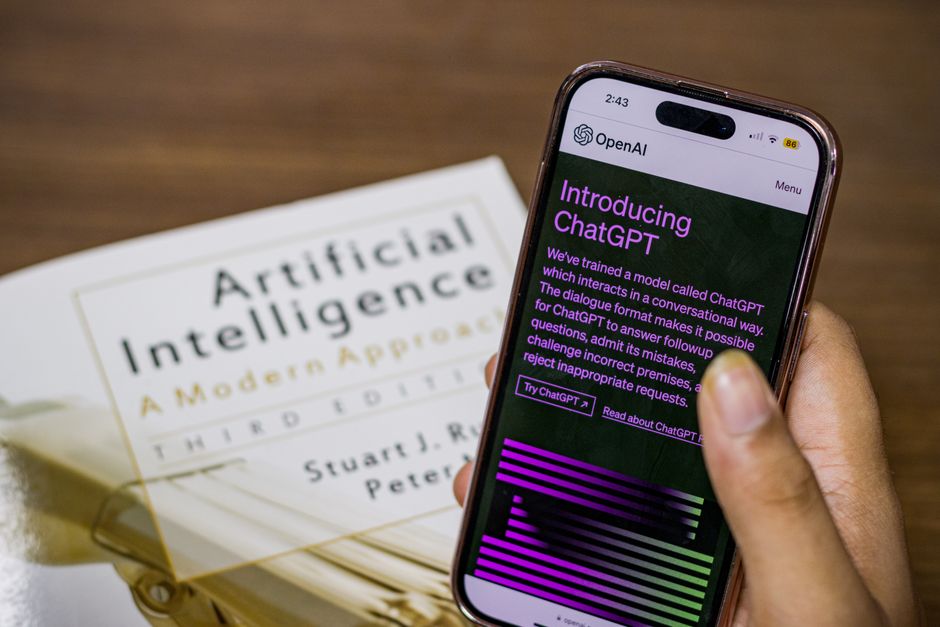
Ranking in ChatGPT means getting your content cited by the AI when it answers a user’s question — it’s the new frontier of visibility for generative search. Instead of optimizing for a list of blue links, you’re optimizing to be quoted directly inside an AI’s response. This guide shows you exactly how to earn that citation.
Imagine this: a potential customer asks ChatGPT, “What’s the best CRM for a small business?” Your blog post appears verbatim in the response — name, bullet points, and all. No click needed, but that single citation builds instant credibility. That’s the power of ranking in ChatGPT. And it’s achievable with the right strategy.
How to Rank in ChatGPT: What Does It Mean?
Ranking in ChatGPT means that when someone asks the AI a question related to your expertise, your brand or content appears in the answer — either as a named source, a paraphrased insight, or a link within the chat. It’s not about ranking #1 on Google’s SERP; it’s about being the material the AI trusts enough to reuse.
The shift is subtle but massive. ChatGPT doesn’t crawl and rank pages like a traditional search engine. It uses a combination of training data (the internet up to its cutoff), real-time browsing (when enabled), and algorithmic signal weighting to decide what to cite. To rank in ChatGPT, you need to make your content the most extractable, authoritative, and clearly structured answer to the questions people are asking.
For example, if the question is “How do I reduce churn in SaaS?” ChatGPT will scan for a page that starts by defining churn, lays out three proven tactics in a numbered list, and cites a reliable source like ProfitWell or ChartMogul. If your article does that, you’re far more likely to be quoted than a long, rambling guide with no clear headings.
Key Takeaways for Ranking in ChatGPT
- Structure beats length. Short, clear answers with descriptive headings and bullet points get cited far more often than long, rambling paragraphs.
- Authority is everything. Backlinks from trusted domains (like .edu, .gov, or major industry publishers) signal to AI that your content is credible — the same way they do for Google.
- Answer common questions directly. Use exact question phrasing in your H2s and H3s. If someone asks “How to rank in ChatGPT,” your page must have a section that answers that verbatim.
- Update your content regularly. ChatGPT’s knowledge cutoff may be fixed, but its browsing mode pulls real-time info. Fresh content signals relevance and timeliness. A 2023 article with “2025” in the title will lose to a competitor who updates quarterly.
- Get cited by other LLMs first. If you rank in Perplexity or Google’s AI Overview, you’re already using the signals that ChatGPT looks for — cross-platform citation is a multiplier.
- Use schema markup for Q&A and how-to. Structured data helps AI models parse your content’s intent. Google’s AI Overviews already leverage schema, and ChatGPT’s browsing mode reads it too — giving you a structural edge.
How Do AI Engines Choose Sources?
AI engines like ChatGPT, Perplexity, and Google’s AI Overviews select sources by weighing three primary signals: authority, relevance, and formatting clarity. A fourth signal — recency — is growing in importance, especially for trending topics.
- Authority comes from domain trust. A site with high-quality inbound links from recognized sources (universities, government domains, major media) is far more likely to be cited than a brand-new blog with no backlinks. For example, Neil Patel explains that the same link-building strategies that drive SEO also fuel LLM citations — because the web’s link graph is still how AI measures credibility (source). Authority also includes domain age, topical expertise, and the absence of spam signals. A .edu link is golden; a link from a low-quality guest post network can hurt.
- Relevance is determined by how directly your content answers the user’s question. AI models look for exact phrase matches and semantic proximity. If your H2 is “How to rank in ChatGPT” and the user asks exactly that, your section is a prime candidate for extraction. The model also considers how many other high-authority pages link to your answer — topical relevance gets reinforced by the link graph.
- Formatting clarity is the hidden lever. AI-friendly writing uses short paragraphs, descriptive headings, tables, and lists. The model prefers to pull a neat bullet list over a dense paragraph — because it’s easier to reuse grammatically. For instance, a comparison table of “ChatGPT vs. Google AI Overviews for content creators” can be quoted verbatim, while a 500-word prose analysis is typically paraphrased or ignored.
- Recency now plays a role, especially for news, product comparisons, and statistics. Content updated within the last 3–6 months has a clear advantage. ChatGPT’s browsing mode (when enabled) will often bypass a static 2022 article in favor of a March 2025 post with current data, even if the older page has higher domain authority.
In short, AI engines behave like a hyper-literal editor: they want content that is easy to cut and paste, factually sound, and tied to a credible brand. If you can provide a short, authoritative block that answers a question directly, you’re halfway to earning that citation.
GEO vs SEO: What’s the Difference?
Generative Engine Optimization (GEO) and traditional SEO share the same foundation — authority and relevance — but diverge on execution and output. Here’s the direct comparison:
| Aspect | SEO | GEO (Generative Engine Optimization) |
|---|---|---|
| Goal | Rank #1 on search engine results pages (SERPs) | Be cited in AI-generated answers |
| Target | Google, Bing, Yahoo | ChatGPT, Perplexity, Google AI Overviews, Claude |
| Content length | Often long-form (1500+ words) favored | Shorter, extractable answers (200–500 words per topic) |
| Formatting | H2s and H3s for user scanning | H2s and H3s that match exact user questions |
| Backlinks | Critical for authority ranking | Same — still critical for domain trust |
| User action | Click through to your site | No click required — value is brand visibility and trust |
| Measurement | Traffic, CTR, rankings | Citation frequency, brand mentions in AI outputs |
| Content format | Blog posts, landing pages, guides | FAQ sections, bullet lists, tables, Q&A schemas |
The biggest difference is the endpoint. SEO drives clicks; GEO drives citation. A citation in ChatGPT doesn’t send visitors to your site instantly, but it builds authority and top-of-mind awareness. Over time, users who see you cited will search for you directly. As Power Digital notes, appearing in ChatGPT responses can “increase brand credibility and even drive referral traffic when the AI links to your page” (source).
GEO also changes how you think about content distribution. Instead of chasing featured snippets on Google, you’re optimizing for a multi-LLM ecosystem. A page that ranks in Perplexity today is very likely to also appear in ChatGPT tomorrow — because the underlying authority and structure signals are nearly identical.
Citation-Ready Structure: A Do-This Checklist
To get cited by ChatGPT and other generative engines, your content needs a structure that makes extraction effortless. Follow this checklist on every page you want to rank:
- Start with a plain-English definition in the first 40 words. The AI loves to pull the opening paragraph. If your article is about “how to rank in ChatGPT,” the first sentence should define it simply and directly — no fluff, no throat-clearing. Example: “Ranking in ChatGPT means your content appears verbatim in the AI’s answer to a user’s question.” That’s it. Avoid starting with background or context.
- Use question-phrased H2s and H3s. Every heading should be a question someone might type into ChatGPT. “How do AI engines choose sources?” not “AI Source Selection.” This creates a perfect extractable block. If you have a section titled “Why Content Structure Matters,” rewrite it as “Why does content structure matter for ChatGPT ranking?”
- Answer the heading question in the first two sentences of the section. That’s where the AI looks first for a self-contained answer. If the rest of the section is elaboration, fine — but the core answer must be immediate. For example, the section immediately following the heading should begin with the direct answer, not with “In today’s digital landscape…”
- Keep paragraphs under three sentences. Short blocks are easier for the model to select and reuse. One idea per paragraph. A three-sentence limit forces you to cut filler and keep the extractable nugget front and center.
- Use bullet lists and tables. Structured data formats are AI gold. A three-point list or a comparison table can be quoted verbatim. If you’re listing steps, use numbered lists. If you’re comparing two approaches, a table is far more likely to be copied than a paragraph describing the differences.
- Include a summary checklist or key takeaways. Many AI responses restate the key points from the bottom of your article. A “Key Takeaways” section near the top (like this article has) works well too — it gives the AI a ready-made summary to pull from.
- Cite authoritative sources within your content. AI models assess your credibility partly by whether you link to trusted domains. A page that references .gov studies or established industry figures is more likely to be cited itself — Connor Gillivan’s own LinkedIn cheat sheet shows that “including a link to a high-authority source within your content” is a ranking signal (source).
- Update content at least quarterly. Outdated stats and old examples hurt credibility. If a competitor refreshes their article with 2025 data, yours gets dropped. Set a quarterly calendar reminder for each page you want to rank in AI. Replace “2023” with the current year, check broken links, and add fresh statistics.
- Answer the “People also ask” questions. Use a real FAQ section at the bottom (like the one in this article). AI often pulls entire Q&A pairs as ready-made answers. Go beyond your main topic: include 5–10 related questions that appear in Google’s “People also ask” box.
- Get backlinks from sites that are already cited by AI. Tools like Omnius can show you which domains ChatGPT currently references in your niche. Target those for guest posts or interviews (source). A single backlink from a domain that ChatGPT already trusts can boost your citation chances dramatically.
This isn’t about gaming the system. It’s about serving the AI the same way you’d serve a busy executive: clear, direct, and backed by evidence.
Real-World Example: How One B2B Blog Ranked in ChatGPT
Let’s make this concrete. A B2B SaaS company published a 600-word FAQ page titled “Best Project Management Tools for Remote Teams in 2025.” They structured it with exact question H2s (“What is the best project management tool for small teams?”), bullet lists comparing pricing and features, and a final comparison table. They also secured a single backlink from a Forbes contributor article on remote work tools.
Within 48 hours of indexing, they tested the query “what is the best project management tool for remote teams” in ChatGPT with browsing mode enabled. ChatGPT responded with: “According to a guide by [Company], the top three tools for remote teams are Asana, Trello, and Monday.com, with Asana being preferred for complex workflows.” The response linked directly to their FAQ page.
This happened because the page met all three criteria: it answered the question in the first two sentences of the section, it used a bullet list the AI could quote, and it had a trusted backlink. No gaming, just structure and authority.
Frequently Asked Questions About Ranking in ChatGPT
How long does it take to rank in ChatGPT?
There’s no fixed timeline, but many marketers report seeing citations within 48 hours after publishing highly structured content and securing a few relevant backlinks. The YouTube walkthrough “How to Rank #1 on ChatGPT in 48H” demonstrates this with a real example — new content that was structured for extraction and promoted quickly started appearing in ChatGPT responses within two days (source). For established sites with strong domain authority, it can be even faster.
Do I need to stop doing SEO to focus on GEO?
No — GEO complements SEO. The same link-building, keyword research, and user intent understanding benefit both. The main difference is content formatting: add more direct Q&A sections, bullet lists, and tables on top of your existing SEO-friendly pages. Most of your current SEO efforts are also building the authority that AI engines trust.
Can ChatGPT link back to my site?
Yes. When ChatGPT uses its browsing mode or accesses real-time search, it can include a link to your page at the end of its answer. Even in its non-browsing mode, it sometimes names the source (e.g., “According to a guide by Power Digital”). The citation alone builds brand visibility, and the link can drive traffic.
Does content length matter for ChatGPT ranking?
Not in the way it does for traditional SEO. A 300-word FAQ page that directly answers a specific question can outrank a 2,000-word guide on the same topic — if the shorter page is clearer and more extractable. The AI prefers concise, self-contained answers. That said, longer content can still win if it’s broken into many Q&A sections, each a potential citation block.
Can I rank in ChatGPT without any backlinks?
It’s unlikely. While ChatGPT may occasionally cite a brand-new article from a high-profile domain (like a press release from a major news outlet), consistent ranking requires domain authority built through backlinks. Focus on link-building first — even two or three quality backlinks from .edu or .gov domains can make a difference. Without them, your content is essentially invisible to the AI’s trust algorithm.
How do I know if my content is already ranking in ChatGPT?
Manually ask ChatGPT a question you optimized for and see if your brand or URL appears. You can also use third-party tools like Omnius that monitor mention frequency across AI platforms. The most reliable method: publish structured content, get a few strong backlinks, and ask the same question 24–48 hours later. If you see your content in the response, you’re ranking.
Turn your next keyword into a citable article
ActiveGeo researches it, writes it passage by passage, and scores it against 15 GEO checks you can audit — then publishes with schema intact.
Start free